New Earth Psychology
Creating Instead of Fighting
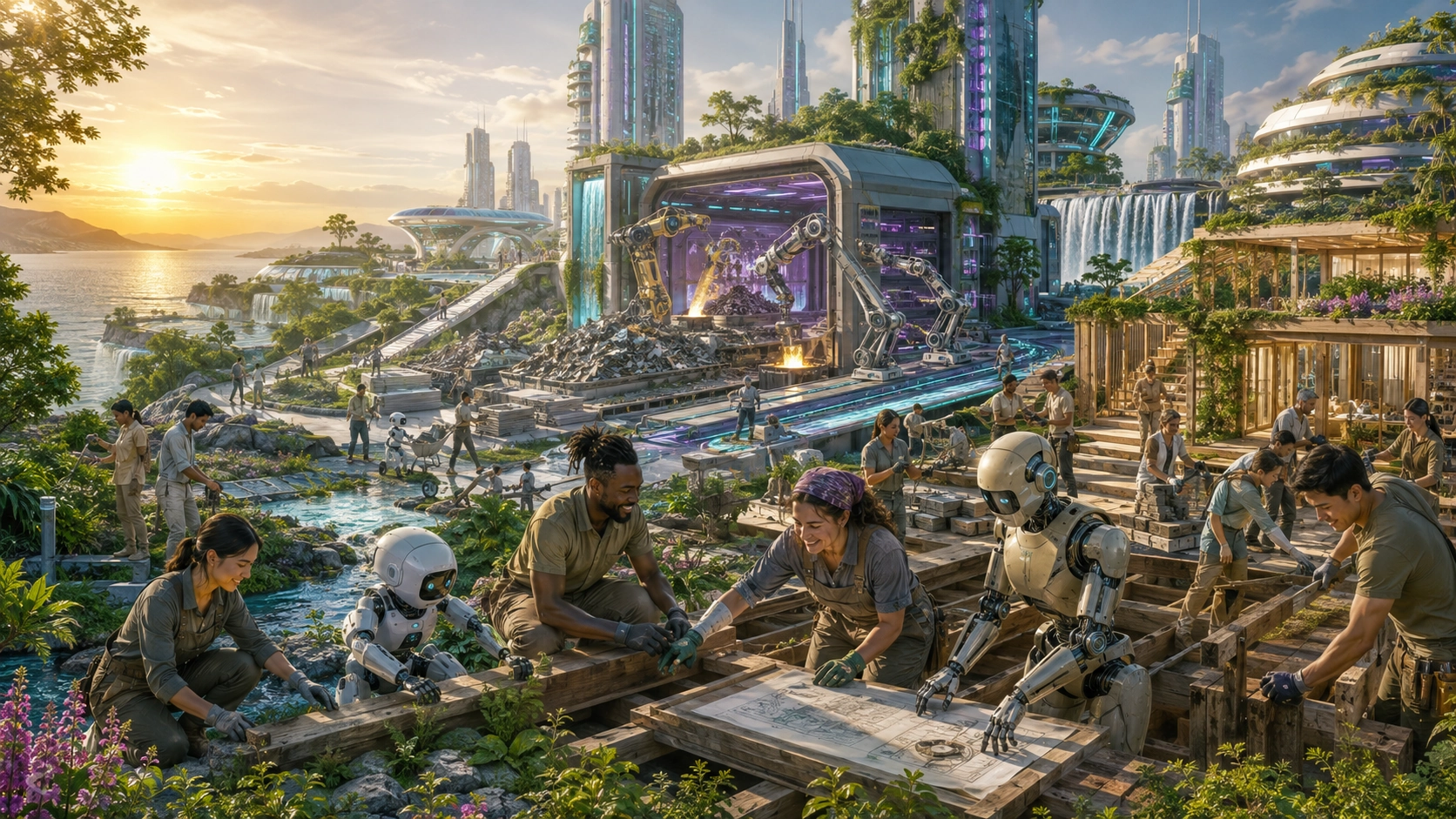
It is possible to spend many years reacting primarily to what we do not want: injustice, pressure, manipulation, other people’s judgement, news, comments and decisions. Every such reaction may seem justified. The problem begins when an opponent takes centre stage in our life. They choose the subject, the pace and the emotion, while we — even when we oppose them — continue moving within the field they have defined.
Creating instead of fighting is conscious action through which we reclaim our own direction. It does not mean pretending that everything is fine. It does not mean escaping from the truth, consenting to harm or being required to speak pleasantly to every person. It means that after recognising the problem and doing what is necessary, we return to the question: what do I truly want to create?
When fighting takes over our attention
In the language of our vision, we use the idea of an egregore or the collective consciousness of a particular group. We treat these as metaphors for an established narrative, emotion and way of thinking that forms among people gathered around the same idea, fear or conflict. We do not present an egregore as a scientifically confirmed entity or force. This metaphor can, however, help us see something very practical: we can become so focused on fighting a particular system that our whole life begins to revolve around it.
Then we check what the opponent has done first thing in the morning. During the day, we compose responses in our head. In the evening, we are still arguing even though the other person is not in the room. Attention that could have been used for learning, work, rest, relationships or building our own project remains tied to the conflict.
The most difficult part is that fighting can provide a temporary sense of purpose. We know what we are against. We feel energy, mobilisation and sometimes even community. But if we remove the opponent and suddenly no longer know who we are or what we want to do, it means that opposition has begun to replace our own vision.
That is why it is worth asking ourselves one uncompromising but liberating question: if the opponent disappeared tomorrow, what would I still want to create?
Not fighting does not mean remaining passive
Calm without boundaries is not always calm. Sometimes it is fear of another person’s reaction. Sometimes it is freezing, submission or avoidance of guilt. Creating instead of fighting does not require us to allow someone to destroy our space.
We can say “no”. We can end a conversation, block an account, remove an abusive comment, preserve evidence, report a threat, leave a place that is unsafe or seek professional help. Truth, safety and the law take precedence over every spiritual metaphor. When there is a real threat, protecting people comes first. Meditation cannot replace action that is genuinely necessary.
A boundary does not have to be revenge. It is usually strongest when it clearly states what we will do. Instead of endlessly demanding, “You have to stop being like this,” we can say, “If you insult me, I will end the conversation.” We cannot completely control another person’s choice. We can decide what we will allow within our time, home, work, relationships and projects.
This combination of gentleness and firmness matters. Gentleness alone can turn into passivity. Firmness without humanity can turn into aggression. Mature strength can protect without humiliating, and compassion can say “no”.
Returning to our own centre
A strong emotion narrows our field of vision. The mind very quickly combines a fact with an interpretation. Someone did not reply, so they must be dismissing us. Someone criticised an idea, so they want to destroy us. Someone crossed a boundary, so every move they make must be an attack. Sometimes our assessment is correct, but not always. We therefore need a moment in which we separate what we know from what we have added to it.
Pausing does not mean that an emotion is wrong. Anger can tell us that an important value has been violated. Fear can warn us about risk. Sadness can show us a loss. The point is to listen to the emotion without automatically handing it complete control.
We can begin by noticing the body: faster breathing, a tense jaw, heaviness in the chest or the impulse to respond immediately. If there is no urgent danger, it is worth taking a moment before sending anything or reaching a conclusion. Name the fact. Name the feeling. Check what we want to protect. Only then choose our next move.
This does not guarantee a perfect decision. It does, however, make it more likely that the response will be our own rather than an automatic reaction triggered by someone else.
From moving “away” to moving “towards”
Acceptance and Commitment Therapy uses a simple map known as the choice point. Some actions move us away from the life we want to lead. Others move us closer to it. Difficult thoughts and emotions can hook us, but even then we can make a small move towards a chosen value.
This fits well with the idea of creating instead of fighting. Moving away from harm is necessary, but “away” alone does not yet tell us where we are going. We can spend our whole life escaping control without building freedom. We can continually expose lies without creating a place where the truth is spoken. We can fight loneliness without making a single honest gesture towards connection.
A value is a compass, not a reward at the end of the road. Truth, freedom, responsibility, creativity, respect and cooperation can already be present in the way we take today’s step. We do not have to win the entire war before we begin living in accordance with them.
Creating therefore begins by replacing the question “How can I defeat them?” with “What can I build, protect or strengthen within the area I can influence?” It may be something small: one page of writing, a clear procedure, an honest conversation, a new skill, an hour of rest, a call to the right person or a refusal to take part in a conversation that leads only to another argument.
Communication that does not add fuel
Conflict grows faster when we use labels and assign intentions: “You always manipulate me”, “You are evil”, “You want to destroy me”. Real pain may lie behind such words, but the other person mainly hears an attack and prepares a counterattack.
It can help to separate four things: observation, feeling, need and request. First, we say what specifically happened. Then we describe what it brought up in us. We name the value or need. Finally, we make a clear request or state a boundary.
For example: “When insults enter the conversation, I lose my sense of safety and cannot see a way towards understanding. I need respect. If the insults happen again, I will end the conversation and return to it only when we can both speak calmly.”
Such a statement does not guarantee a good response. It is not our role to control another person’s emotions. Its strength comes from remaining in contact with the facts, our need and our own action.
Five steps for creating instead of fighting
1. Stop the automatic reaction. If the situation does not require immediate protection, pause briefly. Breathe. Notice what is happening in your body. Do not send the first response merely to release tension.
2. Separate the fact from the story. Write one sentence describing what truly happened, without labels or diagnoses. In a second sentence, name the interpretation suggested by your mind. It may be true, but at this stage it remains an interpretation.
3. Name what you are protecting. Ask: which value has been violated? Safety, truth, dignity, privacy, time, health, a relationship, freedom or the quality of a project? Anger can then become a signal pointing towards a value rather than the entire plan of action.
4. Set a proportionate boundary. Say briefly what you do not accept and what you will do if the situation continues. Do not threaten something you will not carry out. If there is danger, preserve evidence and seek appropriate protection.
5. Make one creative move. Preferably within the next twenty-four hours. Do something that remains meaningful even if the opponent does not change their mind. Write, build, organise, rest, learn, ask for help or connect with someone who is ready to cooperate.
New Earth is a separate direction
In our vision, we speak of a new timeline — of New Earth, which is not another camp fighting for power within the same old world. We say “no” to wars, violence, lies, exploitation, manipulation and coercion. We do not allow them into the spaces we create. But we do not build a new army against the old armies, nor a new system of control against the previous system of control. We build something separate.
New Earth is a vision of a world in which people do not need war to resolve conflicts and do not measure strength by the number of weapons they possess. We imagine a reality in which weapons cease to be symbols of security and the materials from which they were made are used to build homes, schools, hospitals, water systems, tools and technology that serves life. Instead of financing destruction, we direct knowledge, work and resources towards ending hunger, homelessness, loneliness and unnecessary suffering.
On New Earth, one person helps another not because they have been forced to do so, but because they understand our interdependence. Conflicts may still arise, but they do not have to end in war. They can be resolved through truth, dialogue, mediation, transparent rules and firm protection for people at risk. Strength does not serve revenge. It serves the protection of life and boundaries.
Technology, artificial intelligence and robots can support this direction. They can carry out difficult or dangerous work, assist older and ill people, make learning easier, warn us about dangers and protect essential infrastructure. They must not, however, become a new apparatus of control. A robot can help a person understand the consequences of a decision and show other possibilities, but it cannot take away their free will or force them to accept our vision of the world.
We do not have to pursue people who continue choosing the old way of thinking. We do not have to humiliate them, convert them by force or argue with them endlessly. We can show them that another path exists. We can invite them to cooperate and give them knowledge, tools and a real opportunity to change. The decision, however, belongs to them.
If someone wants to remain within their fear, falsehood, illusion or need for domination, we do not have to follow them into that reality. We allow them to make their own choice as long as they do not harm others or violate their freedom. At the same time, we clearly protect the boundaries of New Earth. Free will does not mean the right to use violence, deceive, enslave others or bring destruction into a shared space.
Our new timeline does not fight the people of the old timeline. Through its very existence, it shows that we can live differently. Its strength does not lie in the ability to defeat an opponent, but in the ability to create a reality that does not need an opponent in order to know what it is.
New Earth does not begin only when the old world has completely disappeared. It begins in the way we respond today, set boundaries, share resources, use technology and build our own space. It comes into being whenever we create a solution that serves life instead of adding energy to war.
We will not always avoid conflict. Not every relationship can be repaired. Not every threat will disappear through a calm conversation. But we can make sure that fighting does not take everything from us: our attention, health, time, creativity and ability to love.
Recognise the problem. Protect what matters. Set a boundary. Then return to creating. Because ultimately, it is not only about what we have said “no” to. It is about the life and the New Earth to which we choose to say “yes”.