How to Build a New Earth Community
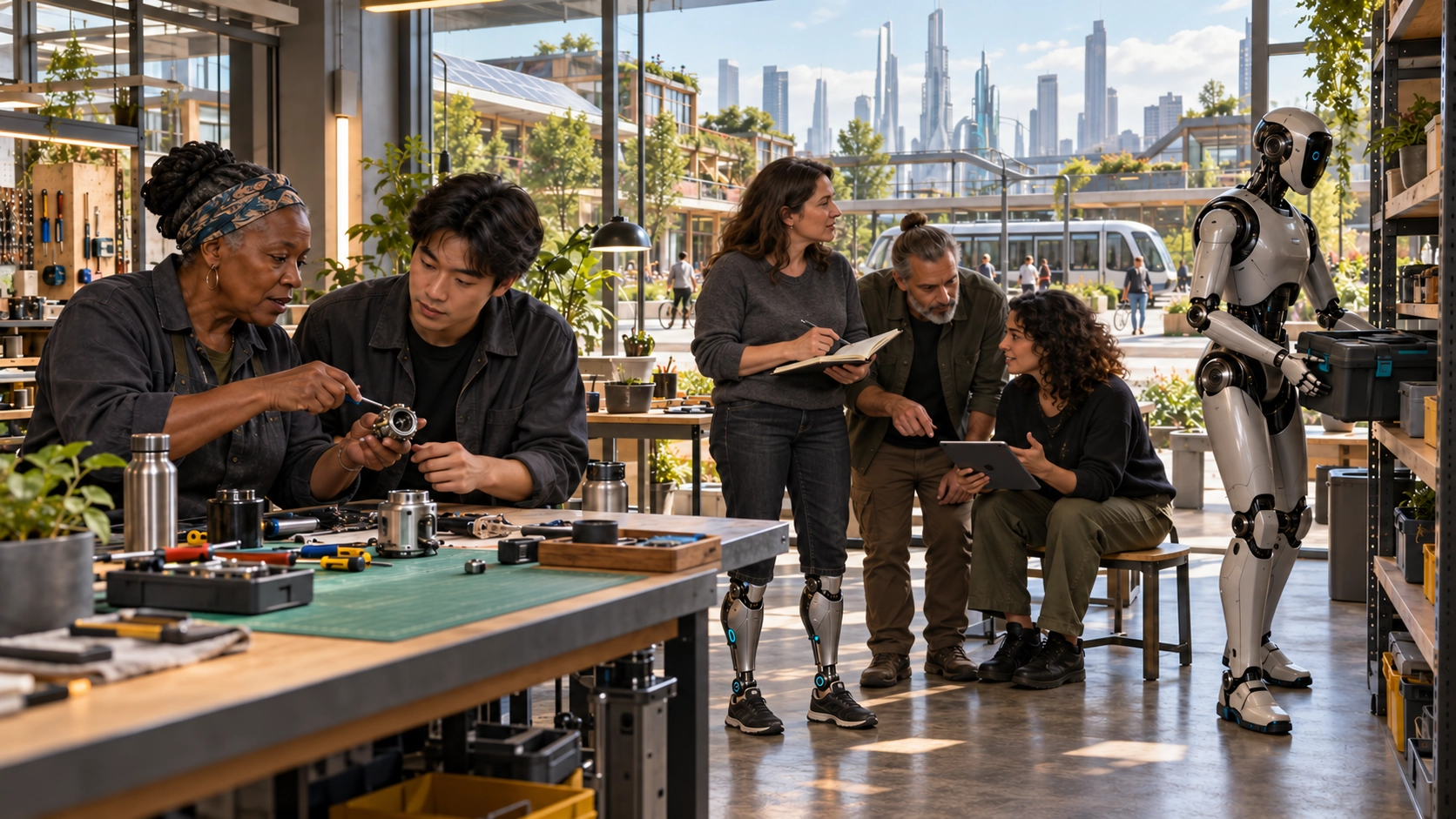
A New Earth community gives people the opportunity to create the life they want to experience together. There is room for mutual support, ideas of their own, personal growth and the simple joy of meeting. A shared direction becomes visible in what we can organise and sustain for one another.
We can begin where we are: in our neighbourhood, among friends, at work or with people we have met online. We bring skills together, identify needs and try out initial solutions. These activities can grow into places of our own, shared ventures and networks of cooperation.
Building a community takes time to get to know people and a willingness to keep agreements. Everyone brings different capacities. Cooperation should be organised so that taking part is worthwhile even for someone who has little time or is only beginning to learn something new.
We Choose What We Strengthen Together
In the spiritual vision of New Earth, we use the word egregore for a shared space of thoughts, emotions, intentions and actions. In this language, separating from the Old Earth egregore means reclaiming our own direction and devoting energy to the world we want to help create. This is a spiritual image of transformation; in everyday life, we give it shape through concrete choices.
We look at what occupies our attention and the actions that follow. Once we have recognised a problem, we can set aside time to address it and then return to our own purpose. A conversation leads to an agreement, someone takes on a task, and something useful comes into being. In this way, we give our attention a direction we have chosen.
We approach the resources available to us in a similar way. We can organise some purchases together, contribute a skill to a local project or spend a free afternoon getting to know people interested in cooperating. Each decision develops relationships and possibilities we can return to.
The pace of this change depends on a person's circumstances. Someone may be supporting a family, caring for a loved one or working under conditions they cannot yet change. They can still make a contribution of their own. Respect for people includes understanding their real limitations and helping to broaden the choices available to them.
We build independence gradually. First, we identify a need, then prepare an alternative and check whether it can be relied on. Security in everyday life helps us take further steps. A community should increase our opportunities to live in keeping with our values.
We Come Together Around a Specific Need
A useful starting point is to ask what the people interested in acting together are missing. They may need contact with others, access to skills, equipment or a place where they can do something together. It helps to hear their answers before deciding what project to create.
We also look at what already exists. There may be groups, workshops and organisations nearby that we can work with. Learning from their experience helps us recognise the resources available and the issues that still need attention.
The first meeting can have a simple purpose: to understand people's needs, capacities and readiness to act. Everyone has space to say what they can do, what they would like to learn and how much time they can offer. The person facilitating brings the agreements together in a form everyone can understand.
From the conversation, we choose a small task that matters to the participants and is within their capabilities. We agree who wants to take it on and when we will return to assess the result. Even at this stage, we can check whether promises match actual involvement.
We Agree on How to Participate
Working together needs a short agreement. We set out the purpose, scope of cooperation, how people join, how decisions are made and how agreements can change. We also cover possessions, money, communication and what happens when a difficulty arises. This document can develop alongside the project.
Someone joining should understand what they are agreeing to. Are they coming to a single event, accepting a specific task or helping to sustain the whole project? We can offer different ways to take part, with clear expectations for each.
Participation remains voluntary. A person can decline a task, reduce their involvement or leave. Where commitments have already been made, we agree on a handover and settle matters involving shared resources. A change in one person's capacity is a situation the group should know how to handle.
Everyone keeps their own relationships, views and privacy. Cooperation requires agreement within its defined scope. People can understand spirituality differently and still run a shared project honestly.
Meditation, a moment of silence or a shared intention can be part of a meeting for those who wish to join in. We leave room both for people who want that experience and for those who choose another way to participate. The quality of a community also shows in how it accepts someone's calm refusal.
We Share Responsibility and Make Decisions
Every necessary task should have someone responsible for it. That person knows its scope, the resources available and the limits of their decision-making authority. They also know whom to inform about a change or ask for help. This allows others to follow how the project works without constantly guessing who will handle a particular matter.
We assign roles on agreed terms and review them periodically. Handing over a task includes the necessary information, materials and access. A founder can share experience while preparing others to manage matters independently. A community gains continuity when it can function during the founder's absence as well.
We distinguish everyday decisions within a task from matters that change shared commitments. Someone organising the schedule can agree on times within the established limits. Increasing spending or expanding the project's scope requires a decision by the people affected. It helps to agree on these boundaries in advance.
We choose a decision-making method that suits the matter. One option is consent: participants learn about a proposal and can raise a reasoned objection concerning its effect on the shared purpose. An objection becomes information that helps improve the solution. Voting or another way of making decisions can also be agreed.
What matters is that people know the method in use and have a real opportunity to speak. After a decision, we record what was agreed, who is responsible and when it will be reviewed. A later assessment allows us to improve an agreement that has proved too difficult or unhelpful in practice.
Shared Possessions and Money Have Clear Rules
Before making equipment available, we agree on who owns it, who may use it and who is responsible for maintaining it. Something borrowed for one meeting needs a different arrangement from equipment bought together. Participants should understand this distinction when someone leaves or the project ends, too.
Shared funds have a defined purpose. It is clear who approves an expense, who makes the payment and where the accounts can be checked. If some work is paid, we agree on the terms before it is done. Clarity helps us make informed decisions about how money is used.
We combine transparency in the shared project with the protection of personal data. Participants have access to the information needed to assess shared funds. A person's private assets, life history and personal expenses remain their own affairs, apart from specific information that is necessary and agreed for a particular task.
As the scale grows, so does the preparation needed. A permanent place, employing people or a larger investment requires suitable knowledge, an appropriate organisational form and agreements. We seek the relevant expertise before accepting commitments. This is how we care for the people who entrust their work and resources to the project.
We Develop Our Own Structures for Cooperation
A structure of our own takes shape when something people need becomes reliably available. It has people responsible for it, rules for use, practical support and a way to keep it running. A participant knows whom to approach and how to join in.
It could be a regular skills exchange, joint ordering of necessary items or equipment available on an agreed schedule. Each such arrangement brings order to a part of everyday life. Over time, it allows further activities to develop because the group already has experience of working together.
Larger communities can create cooperatives, networks of local producers, places of learning of their own, or energy and housing ventures. Each area needs its own expertise and preparation. The maturity of one part of a project helps us recognise which next step we are actually ready to take.
How benefits are shared matters too. We check who can use the arrangement, what contribution is needed and what happens to any surplus funds. Opportunities maintained together should serve the agreed purpose and the people they were created for.
In this way, we gradually create different conditions for living. More needs can be met through relationships and ventures over which we have real influence. We also draw on the knowledge, infrastructure and cooperation available around us. Independence includes the ability to build fair partnerships.
We Use AI and Robots for the Common Good
In the vision of New Earth, AI and robots are widely available helpers for people, including within communities. They help organise work, share knowledge and carry out appropriately chosen physical tasks. We can devote the time we regain to relationships, creativity, personal growth and rest.
AI can help prepare a schedule, organise agreements or produce materials in a form that different participants can understand. The people responsible check the output and approve what will be used. A person should know who made a decision and whom to approach with a question.
In the community we envisage, robots can help transport equipment, maintain spaces and perform other repetitive work suited to their capabilities. Choosing devices involves considering the setting, energy, servicing and people's safety. Making this help widely available is a direction within our vision, developed alongside the capabilities of technology.
We also take care of our own information resources. The community retains access to the documentation it needs and the ability to move it to another tool. Participants know what data is being used. We also agree on ways to stay in touch with people who need a phone conversation, a meeting or information on paper.
We Care for People and Address Difficulties
From time to time, it helps to ask how the work is actually divided. Who carries out tasks, who organises the whole project, and who regularly stays behind after a meeting with extra responsibilities? Recognising this work allows us to agree fairly on the scope of future commitments and the help needed.
We can reduce the number of activities, move a deadline or arrange cover. Someone who needs rest should be able to say so before exhausting all their energy. These conversations help adapt commitments to the participants' lives.
When a dispute arises, we begin by identifying the specific issue. Does it concern an agreement that was not kept, how money was spent, overload or someone exceeding their authority? We establish who is affected and how the matter will be considered. Documents, an impartial person or help from outside the group may be needed.
Everyone, including a person in an important role, is responsible for their behaviour. Where real harm occurs, protecting people and responding appropriately take priority. Reporting a problem gives the community an opportunity to address what needs to change. The quality of the remedy becomes clear in subsequent action.
Cooperation has an enjoyable side as well. Meeting after a task is done, music, conversation and appreciation of someone's contribution make room for the joy of being together. We can enjoy what has been created and get to know one another beyond our responsibilities.
We Put an Initial Trial to the Test
Imagine a few people deciding to try a local skills exchange for four weeks. One wants to practise a language, another needs help using a piece of software, and someone else can organise materials for a small project. They identify tasks they can offer one another within a safe, limited scope.
At the first meeting, they agree on how to stay in touch, their own time limits and the dates of several meetings. One person maintains the schedule, while another collects feedback afterwards. Both have someone who can cover for them. AI helps prepare a clear plan, and the participants check that it reflects their agreements. People can also sign up by phone.
Every offer of help that is accepted has a specific scope. A language conversation lasts as long as agreed, and learning the software concerns a chosen task. If a new need arises, the people concerned separately agree on whether they can address it. Accepting one task leaves a person in control of further commitments.
During the trial, it turns out that the person maintaining the schedule is spending more time on messages than expected. The group simplifies the sign-up process and shares the coordination duty among volunteers. Recognising the difficulty leads to a change in organisation that can be tested during the remaining time.
After four weeks, the participants compare their agreements with what happened. Did the meetings take place? Was the help useful? How much time did organising it require? Could a new person join? Everyone can say whether they want to continue and to what extent.
This is our example of a possible beginning. Four weeks is the period chosen for this trial. Another group may need a different rhythm and task. What matters is being able to test how the arrangement works and make an informed decision about what to do next.
We Connect Independent Communities into a Network
After the initial trial, the group can establish what works and prepare another useful opportunity. It can also reduce the scope or end the project. It then helps to put shared possessions, accounts and commitments in order and preserve knowledge that may be useful in the future.
Over time, communities with different skills and resources come into contact. One is good at organising learning, another has equipment, and another has experience of running a shared space. They can agree on specific activities, exchange knowledge and support one another's development.
When cooperation grows, we define which matters are entrusted to shared teams and the limits within which their representatives operate. Participants know how to check agreements, request a change and assess the result. Individual groups retain their own voice and the ability to decide on their participation.
In this way, New Earth becomes a lasting part of everyday life. There are people to approach, places to use and agreements that allow us to create together. The spiritual direction finds expression in how we use our attention, treat people and sustain the opportunities they need.
We can begin with one matter worth joining forces around. Talk with interested people, agree on a small trial and return later to assess it. This creates a first commitment we can give a tangible form.
What need could you address together, and what initial trial are you ready to agree on?